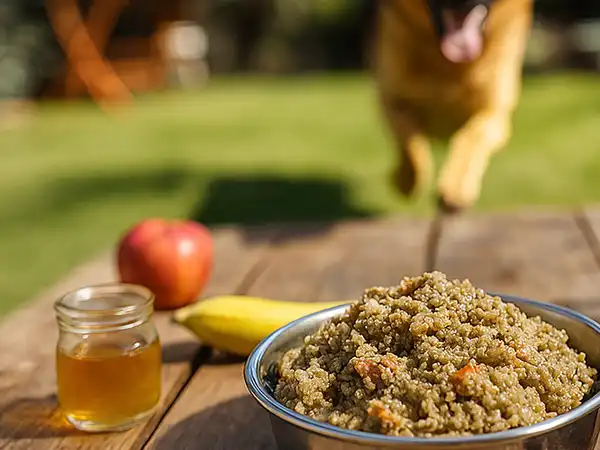

There are a million different types, brands, size, flavors, and shapes of healthy dog treats on the market. Every dog treat brand wants to convince you that they’re a healthy dog treat. Are they truly healthy, though? What defines a healthy dog treat? What makes a dog treat more like junk food? Do we want to risk making our dog fat, sick, or unhealthy?
Additives Run Rampant in the Healthy Dog Treat Industry
Dog treats have made significant progress over the years. Yet, many manufacturers still can’t manage to produce a high quality, healthy dog treat. Many are filled with processed foods, additives, dyes, sugars, preservatives, oils, fillers, and other unhealthy “ingredients”.
“The AAFCO Model Pet Food Regulations recognize the intended purpose of treat products and do not require that pet treats meet the nutritional adequacy requirements for a complete and balanced dog or cat food.” – AAFCO
These types of ingredients are used because they’re cheaper than higher quality ingredients. It’s up to the customer to be vigilant, reading the ingredients list, and even consider where those ingredients come from.
Should grains be in a healthy dog treat?
Dogs, evolved from wolves, are usually classified as Carnivorous, but they would also forage for herbs, roots, fruits and vegetables. Wolves, as a pack, often went after ruminants, who ate vegetation. When they ate an animal, they would consume the entire animal. This included any food left in the stomach of the animal.
History and science tell us a crucial fact. Wolves did not eat grains as part of their natural diet. Wolves would not have been capable of processing grains and converting them to energy. Over time and domestication, however, many dogs have evolved to eat and process grains (very interesting study).
Have all dogs evolved to eat grains?
There are, still, certain dog breeds who cannot eat grains successfully, which means grains are not a healthy choice for them. Those closest to their wolf ancestors, the ancient breeds, cannot properly process and digest grains. They have not had enough time to evolve to handle grains in their diet yet. These breeds include:
- Dingo
- Pug
- Siberian Husky
- Laika
- Greenland Sled Dog
On the other hand, there are the more recent dog breeds. These breeds are much more capable of digesting grains, given their more domesticated dog DNA:
- English Springer Spaniel
- German Shepherd
- Rottweiler
- Border Collie
- Whippet
Should you feed, or include grains, in your pup’s dog food or a seemingly healthy dog treat that contains grains? That’s up to you, but I would strongly suggest considering your dog’s breed first. If you have a rescue like me, made up of many breeds, it’s important to carefully test these treats with your dog before going all in on grain-inclusive brands.
Some dogs have very sensitive stomachs (like mine), so keep in mind there may be an allergy or sensitivity you’re unaware of too. It’s always best to start slowly.
What makes a healthy dog treat truly “healthy”?
The same things that makes food healthy or unhealthy for a person. Whole foods are always better, but keep in mind that there are many human foods that are poisonous for dogs. The AKC is a great resource for learning what human foods you should and shouldn’t feed your dog.
And, even if sugar isn’t poisonous for your dog, it’s not healthy for them. Dogs should avoid sugar. It’s safe for your pup to have foods that contain natural sugars, like dog-friendly fruits and vegetables. However, giving them sugar on a regular basis can impair their systems, affecting metabolism, weight, and even oral health. It’s not worth it, and it’s not a healthy dog treat (not even close), and it’s not part of their natural diet.
Making simple healthy dog treats at home is a great way to reward you’re dog. Homemade healthy dog treats, using fresh, whole foods that are dog-friendly, are usually healthier, cheaper, and tastier than many of the supposedly healthy dog treats on the market today. Beyond that, read the ingredients label closely, looking for mostly whole foods that your dog can easily digest. If there’s anything in the list that is questionable, it might not be a good choice for your dog. Clean food is always the best food.
Any dog treat you buy should have a short list of whole foods. If there a bunch of additives, sugars, fillers, and preservatives, it’s probably not a healthy treat for your dog. It’s a cheap one.
What is your favorite healthy dog treat? Do you have a recipe to share? Does your dog have one they can’t live without and begs for daily? Let us know in the comments!