There are so many different dog chews and bones these days. Today, we’re discussing the pros and cons of the different dog chews we’ve tested. Some of these chews are great, while others have the potential to be dangerous to your dogs.
Keep reading to see why these different dog chews may or may not be the best choice for your dog. Which dog chews are best for your pet’s chewing habits, and which are too risky to try at all?
Different Antler Chews
Antlers are a very different dog chew, as they are eco-friendly. naturally shed, and collected by hand. They’re interesting, as they differ from one animal to the next. The density of the inside (marrow) and the protective outside change, based on what animal they come from.
For example, deer antlers are the hardest, putting your dog at risk of cracking a tooth when chewing on them. Moose antlers are the softest. They’re best for puppies or senior dogs. Elk antlers, on the other hand, are in between, and best for average chewers. If you’re considering antlers for your dog, get them split, so your dog can access the soft, healthy marrow inside.
The outer core of an antler is the toughest part. Therefore, unsplit antlers are generally recommended for heavy and aggressive chewers.
Marrow density can also vary, based on what part of the antler it’s cut from. The top of an antler is less dense than the base. And, the base needs to be thick and strong to hold up the antler.
Remember to keep your dog’s chewing habits in mind. Are they gentle chewers? Is your dog a destroyer? All the different dog chews come with risks. The softer the antler, the more likely it is to splinter. The harder it is, the higher the risk of tooth damage. Elk antlers tend to be a good choice for many chewers, as it has a nice balance of density and hardness. Also, consider looking for “Grade A or A+” antlers, and always supervise your dog when chewing on anything.
Nylabones & Benebones
Nylabone and Benebone are similar dog bone alternatives, made with nylon, which is a form of plastic. Nylabone has an edible version of their bone, but it contains starches and other fillers. These brands are popular and can be safe for mild to average chewers. However, they’re very dense, and can be risky for aggressive chewers and dogs with weak teeth or gum issues. They may also cause damage if pieces are ingested (excluding the edible Nylabone).
Plastic is toxic, and not meant to be ingested. I would not recommend the original Nylabone or Benebone for heavy chewers. However, the edible Nylabone is a potential option if you don’t mind the added fillers.
REAL Rubber Dog Chews
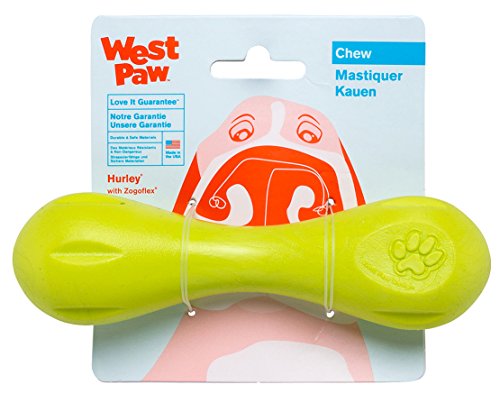
I have two incredibly aggressive chewers. Both of my dogs LOVE to chew on their WestPaw rubber dog “bones” or their Kongs. Most of the time, these toys hold up to the chewing, but keep a close eye on them. I have one dog who severed the top right off the Xtreme Kong, so it always depends on the chewer. Rubber dog chews can also be dangerous in another way.
Rubber is rubber. It’s tough, but not entirely indestructible. That, my friends, depends on your dog and their chewing habits. My dog, Cali, for example, has been chewing on her favorite rubber bone for over a year. She has never gotten a piece off of it. She does chew on it, but not the way she would an antler. It’s more playful chewing, like hearing it squeak against her teeth, etc.
My other dog, Willow, chews on everything like she wants to end it! She HAS taken a good chunk out of one, so I have to be near her when she chews on rubber toys. This includes Kongs, Pupsicle holders, WestPaw toys and the like.
If any pieces end up being swallowed, there’s a very real risk of intestinal blockage. If it’s a tiny piece, it may pass on its own. This process depends on the size of the piece swallowed versus the size of your dog’s intestinal tract. The larger the dog, the larger the intestinal diameter. Don’t risk it. Monitor your dog while chewing on anything.
"A good dog deserves a good bone."– Ben Jonson
Yak Cheese Dog Chews
Yak chews are both natural and nutritious. Cali loves all kinds of different dog chews, including Yak chews, but I no longer feel comfortable giving them to her. Unfortunately, we had a negative experience with Yak chews.
She would normally gnaw on the chews until I decided she’d had enough. Then, I would replace it with something else, like peanut butter or another high-value snack. Then, I saved the leftover piece for later, as long as it wasn’t too small.
I learned, online, about putting the little Yak chew end piece in water. Then, puffing it up in the microwave to soften it into a “puff”. It sounded like a great idea, so I tried it, and Cali was more than eager to try it.
In the following hours and days, she gagged and dry-heaved at times. I was worried, but couldn’t figure out what was going on. Eventually, a day or two later, she vomited up a few small “shards” of the yak bone in my bedroom. At that moment, I finally understood what had happened. The process of puffing it had made the chew brittle instead of soft. She ended up being fine, but I’m reluctant to ever give her another Yak chew again, especially since there are so many different dog chews out there to try.
If you do decide to give these to your dogs, proceed with caution. I would make sure the Yak bones are high-quality, and don’t crack. And, don’t make the mistake of creating a “puff” out of them. It causes the chew to dry, crack, and splinter.
Clean, Natural Bully Sticks
Bully sticks are high in protein, long-lasting, and have little risk of splintering. Unfortunately, the diameter of your standard bully stick is about the size of most dogs’ intestinal tract. This makes it very dangerous if swallowed whole. It’s that last inch of the bully stick that’s the biggest choking hazard, so how do we prevent this risk? Removing the bully stick is an option, but dogs won’t be happy about it. Try replacing the bully stick with something of higher value, like a small piece of cheese or peanut butter. Alternatively, and the easiest way to prevent choking on the end piece, is….
…a bully stick holder. It’s a great way to keep your dog safe while chewing on a bully stick. I’m not talking about just any bully stick holder. It has to be one that actually works! We’ve tried many different bully stick holders in our household. Cali managed to pull the bully stick out of every single one! The ONLY one that did the job was a bully stick holder by Chewise. It’s better than the others because it has metal “teeth” that “bite” into the bully stick. It becomes immovable. I’ve put Cali to the test on this one and it’s a solid winner!
Coffee Wood & Other Wood Chews
I allowed my two dogs to try out Coffee Wood “Bones”, and we found them wanting. The concept is great, but in reality, they are messy and flake terribly. We even made it harder for our aggressive chewers to chew it buy getting the root style, which is supposed to lessen the dog’s grip and also be more dense, making it harder to break through or crack. We found this part to be true, but it didn’t reduce the flaking of the wood, both tiny and larger pieces. Fortunately, my dogs spit out the larger pieces, but they were unable to spit out the tiny flakes, and ended up swallowing them. Cali is very sensitive and vomited up the small wood flakes that night, so that was the end of the wood dog chews for us. We don’t recommend them, even though I felt that the ones we got were clean and high-quality.
Raw & Cooked Bones
Raw bones are natural and nutritious for dogs, but are they safe? Raw bones are healthy. However, they can be incredibly hard in density, depending on the bone. This hardness can be dangerous for canine teeth. They can also carry some scary bacteria. If the wrong bacteria is present, it can make your dog really sick.
You might be thinking cooked bones could work as a replacement. However, when you cook bones, they become brittle and prone to cracks or splintering. This creates a risk of intestinal blockage. If it does, the sharp piece could could damage the intestinal wall when accidentally swallowed.
Our Dog Chew of Choice
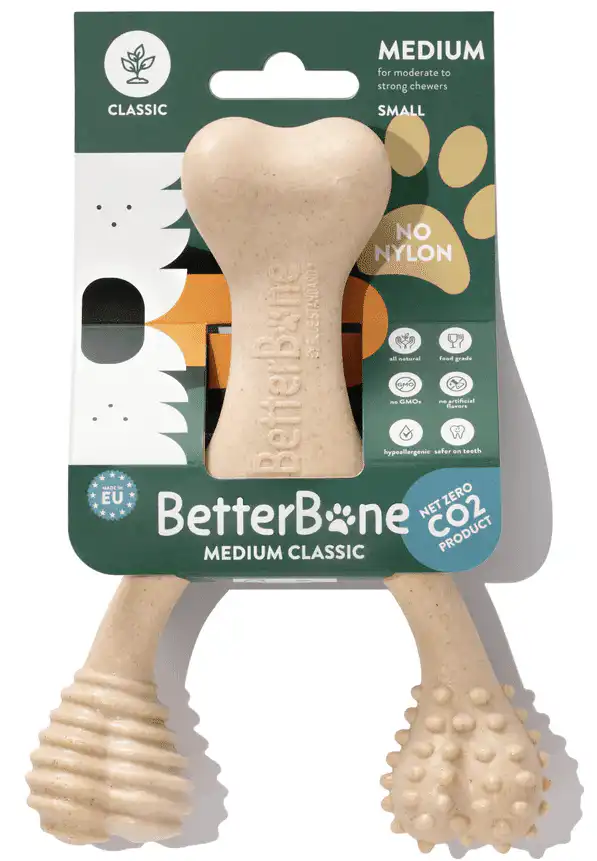
We know our dogs’ aggressive chewing habits. We have tried all of the different dog chews and bones at one point or another. Based on our experience, we’ve concluded that the Betterbone is a great bone alternative. It has fewer risks and dangers than other dog chews mentioned above. It’s natural, engaging, lasts a very long time, and you can choose the size and density of the bone to fit your dog’s chewing needs. Betterbone is also splinter-resistant, eco-friendly, and sustainable.
Cali has been able to get a small chunk of the hard Betterbone, but we supervise and snatch them up. She hasn’t got one past us yet. Having said that, there are tiny flakes that come off now and again. These tiny flakes are safe to ingest, but larger ones are not. Betterbone is not intended to be an edible bone. We love that it doesn’t have a funky smell, and doesn’t stain anything. I will say, though, our dogs’ teeth scraping against the bone can be a bit loud.
You’re going to give your dog the chew that you feel most comfortable with. But, no matter what dog chew you choose, make sure to buy the appropriate size and density for your dog. Supervising your dog when they have a chew is critical to keeping them safe, so keep watch. Lastly, if you every feel like something might be wrong, consult with your vet immediately for further instruction.