
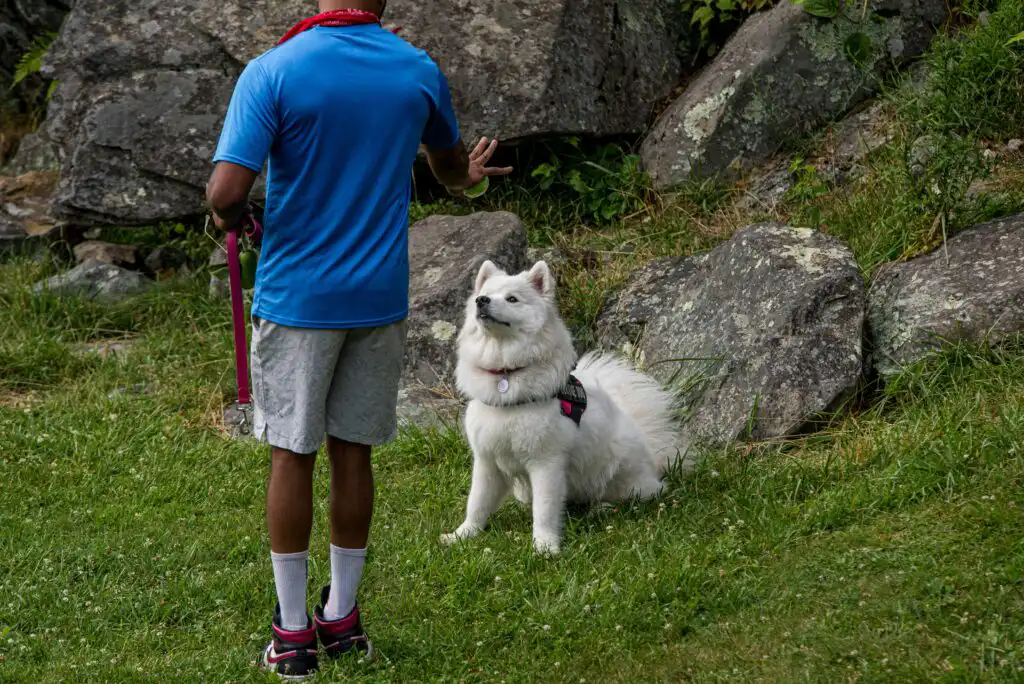
A Dog trainer or dog behaviorist is probably what you’ve searched for online when looking for help with dog behavior issues with your dog. Both of these dog professionals work with dogs and owners on behavior issues. The difference is what they train them to do and how they correct dog behavior.
A puppy learning basic skills has different needs than a dog dealing with fear, aggression or separation anxiety. Both situations could benefit from the right guidance. The dog professionals you choose matter. You need to understand when it’s appropriate to work with a dog trainer, behaviorist, or both. This saves time, reduces frustration & gives your dog the best chance of progression.
What do dog trainers do?
Dog trainers teach dogs and help owners communicate with their dog. Training is mainly about teaching basic behaviors so they can live easier with their family members. If bringing home a puppy or helping an older dog learn the basics, a qualified trainer can provide structure, direction and a solid plan based on your behavior goals.
Most people imagine teaching a dog commands like sit, stay, and come. Trainers can also help with loose leash walking, reliable recall, polite greetings, crate training, handling, and appropriate social skills. They also teach dog guardians how dogs learn and reinforce the types of behaviors they want. Not all good training involves getting the dog to obey. Communicating and establishing trust between the dog and their people are important too.
After getting Cali, we eventually hired a dog trainer who came directly to our home to help teach us how to train our dogs. Cali is very high-energy, but incredibly smart. She now knows “sit”, “down”, “up”, “stay”, “off”, “wait”, “leave it”, and we’re still working on “come”. Willow is a big spacey and struggles to follow instruction, but she does know “sit and stay”, “come”, and “down”. We’re still working on some other commands with her. Some dogs are quick to learn, while others take more time, so be patient with your pups. They’ll get there in their own time.
Not every behavior problem can be fixed simply by teaching a dog a new command. A specific behavior sometimes suggests something deeper going on with your dog. This is when you might need to consider a dog behaviorist.
What is a dog behaviorist?
A dog trainer studies skills while a dog behaviorist studies why a behavior occurs. Behaviors are expression. A dog’s environment, emotions, past experiences, and physical health all have a response. A dog behaviorist considers this before creating a plan to change the behavior.
Dogs with fear, anxiety, chronic stress, resource guarding, aggression, compulsive behaviors, or severe reactivity are typical cases for behaviorists. These dogs aren’t necessarily stubborn or refusing to listen. Usually, they’re just naturally responding to something frightening, overwhelming or uncomfortable for them.
Know that your dog responding emotionally changes how the problem is handled. A dog behaviorist looks at what causes dog behavior issues instead of trying to stop it, and works to change the underlying emotional response. Helping a dog feel safe and healthy is important for being able to cope in the world.
Behavior modification takes longer because emotional responses don’t change overnight. A dog who’s afraid of strangers may need controlled opportunities to make positive associations. A separation-anxious dog might require a plan to gradually teach them that being alone is safe.
Understanding what a dog needs requires behaviorists to collect a lot of information about the dog, like history, environment, daily routine, triggers and body language. This helps them find patterns and create an appropriate plan for each dog.
How Training and Dog Behaviorists Overlap
Dog training and dog behavior modification are not entirely separate, but both are important. They, actually, can work together well. A fear-based dog might need behavior modification and learning skills to cope with anxiety while also making walks easier.
This overlap explains why some dog owners have trouble deciding which professional to call. Training affects behavior and sometimes even involves training to modify behavior. A dog trainer generally starts with the skills you want to teach your dog and then trains them to meet those goals. A behaviorist asks why it happens, what emotions are triggered and what is, potentially, influencing it.
The best professionals know each dog is unique. They understand learning theory, canine communication, body language, and behavior, and adjust their approach depending on the dog.
Why Dog Trainer & Behaviorist Qualifications are Important
Dog owners need to understand that titles like “dog trainer” and “dog behaviorist” are not defined legally everywhere. Also, someone may advertise services without much education or professional experience. This means you need to look beyond a job title when choosing someone to work with you and your dog.
Look for dog professionals who continue to learn, are current on scientific research and who use humane, safe and scientific methods. Organizations like the certification Council for professional Dog Trainers, the Karen Pryor Academy, the International Association of Animal Behavior Consultants, the Pet professional Accreditation Board (PPAB), the Victoria Stilwell Academy for Dog Training & Behavior, and the Fear Free Certified professional Program offer education and certification opportunities.
Veterinary behaviorists receive additional training. They’re licensed veterinarians who complete added, specialized, education and residency training in animal behavior. Because they’re veterinarians, they’re qualified to also evaluate medical issues that may be the cause of behavioral problems.
The credentials are just one part, and a certification by itself doesn’t necessarily mean they’re a good fit for your dog. Education, experience, and a willingness to learn says lot about how serious a dog professional is about their work.
Which professional is the best fit for your dog behavior issues?
This depends less on how the behavior looks and more about why it happens. Whether your dog needs help learning manners, walking politely on a leash, coming when called, settling, or adapting to life with your family, a dog trainer can help. This usually involves teaching basic skills, better communication, and helping you and your dog form good habits.
A behaviorist might be better if your dog’s behavior is having emotional responses such as fear, anxiety, frustration or aggression. Severe reactivity, resource guarding, compulsive behaviors & separation anxiety may require a more detailed behavior assessment. Even behaviors that look like jealousy could have other motivations that need to be understood before deciding how to address the issue.
Sometimes your dog will need both dog professionals. A behaviorist helps you identify the emotional triggers and develop a behavior modification plan. A dog trainer helps you practice skills and exercises to support that plan. These two professionals working towards the same goals can help a dog in multiple ways by working together.
What to Look for to Find the Right Dog Professional
Always research any dog professionals you’re considering. Ask questions about their education, certifications, and experience with similar cases. Ask bout the methods they use. An experienced professional will explain why they suggest a certain approach and will want to learn more about your dog.
Pay attention to how they talk about dogs too. Be wary of anyone who promises immediate results, or uses intimidation or punishment. Behavior change takes time, and progress looks different for each dog. A good professional has realistic expectations, considers the dog’s emotional state, and works with the owner.
The Right Training Support Makes All the Difference
Knowing what differentiates a dog trainer from a dog behaviorist is helpful in finding the right help for your dog. Neither professional is more important than another. They simply serve different purposes. The right choice depends on the dog, what you see at home or in public, and what you hope to achieve.
Rather than fixating on your dog’s behavior, address their behavior to help you understand them better. That understanding might make your dog feel more confident in you, plus strengthen your relationship and improve life for both of you.
What has your experience been with addressing unwanted dog behaviors? What worked for you and your dog and what didn’t? Please share with the rest of us in the comments below!